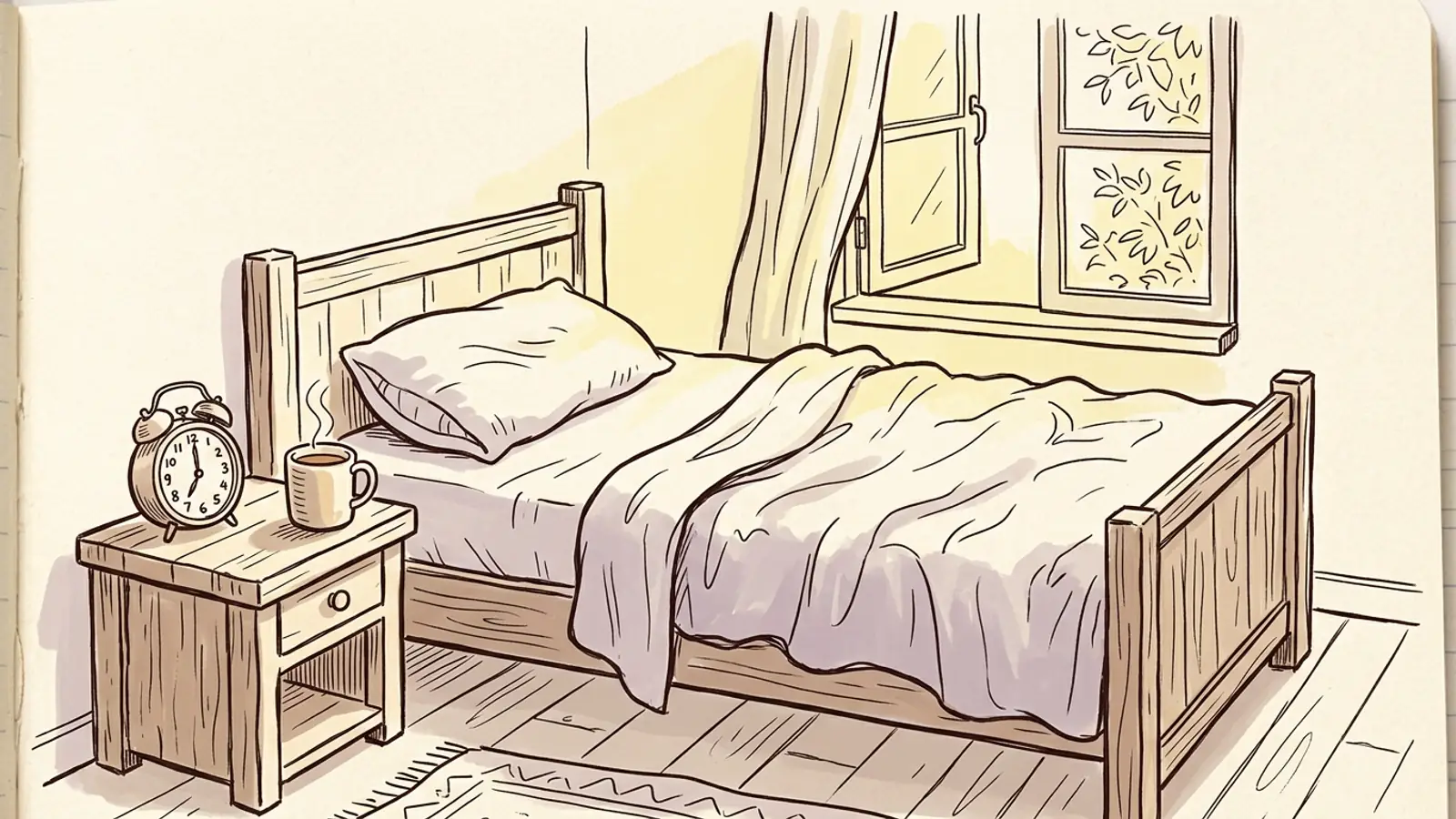
For about three years I answered the question "why do I feel groggy after waking up" with a shrug and a second coffee. The fog was just what mornings were. The alarm went off, I found it, and for the next half hour I read the same text three times and put the milk in the cupboard. Once I brushed my teeth with hand cream. That fog has a name. It has been measured, and part of it is arithmetic you can change.
What the fog is called, and what it does to you
The name is sleep inertia. It means the stretch after you wake when your body is up but your brain has not finished arriving. You are slower, clumsier, worse at sums and worse at decisions. Usually you do not notice how bad you are, and that is the part I find most unsettling.
The clearest summary I have read is a review by Tassi and Muzet in Sleep Medicine Reviews, 2000. They gathered decades of studies where people were woken on purpose and tested right away. The pattern holds across them. Performance is worst in the first few minutes and climbs back from there.
How long does the climb take? In a 2019 review in Nature and Science of Sleep, Hilditch and McHill found that most studies see performance back to normal within about 30 minutes, sometimes as soon as 15. They also noted that some measures stay below normal for longer. If you feel like yourself by the time you leave the house, you are about average. If it takes until the second coffee, you are not alone, and a short night or an odd wake time is the usual reason.
The number that stopped me came from Wertz and colleagues in JAMA, 2006. They tested people's thinking right after a normal night's sleep and compared it with the same people after more than a day awake. In the first few minutes after waking, performance was as bad as or worse than after the long stretch without sleep. It was a small study, and "the first few minutes" matters. It still explained why I should not answer anything important straight out of bed.
There is a brain picture behind this too. Balkin and colleagues scanned people as they woke, in the journal Brain in 2002. The deeper parts of the brain that handle basic wakefulness came back fast. The front of the brain, which plans, judges and catches mistakes, lagged behind. That matches how it feels. You can walk to the kitchen, but you cannot be trusted with the milk.
Why some mornings are foggier than others
Not every morning is equal. The research points to three things that thicken the fog.
What stage of sleep the alarm catches
Sleep comes in cycles. Each one moves from light sleep into deep sleep, the slow heavy stage where you are hardest to wake, and then into REM, the dreaming stage, before starting over. Carskadon and Dement describe a cycle as roughly 90 minutes in Principles and Practice of Sleep Medicine, and yours may be 70 or 110.
Waking out of deep sleep brings the worst inertia. That result comes up again and again in the studies Tassi and Muzet reviewed. Waking from light sleep or REM tends to go easier.
How short the night was
The less you slept, and the more short nights in a row, the heavier the fog. A tired brain pushes harder into deep sleep, so there is more of it for the alarm to land in. I did not believe this until my spreadsheet showed it. Nearly all my worst mornings came at the end of a week where I had lost an hour or two a night.
What time your body thinks it is
This is the one that explained my twenties. Scheer and colleagues, in the Journal of Biological Rhythms in 2008, moved people's wake times around the clock in a lab. The fog was worst when people woke during their biological night, the hours their internal clock treats as the middle of the night, whatever the wall clock said.
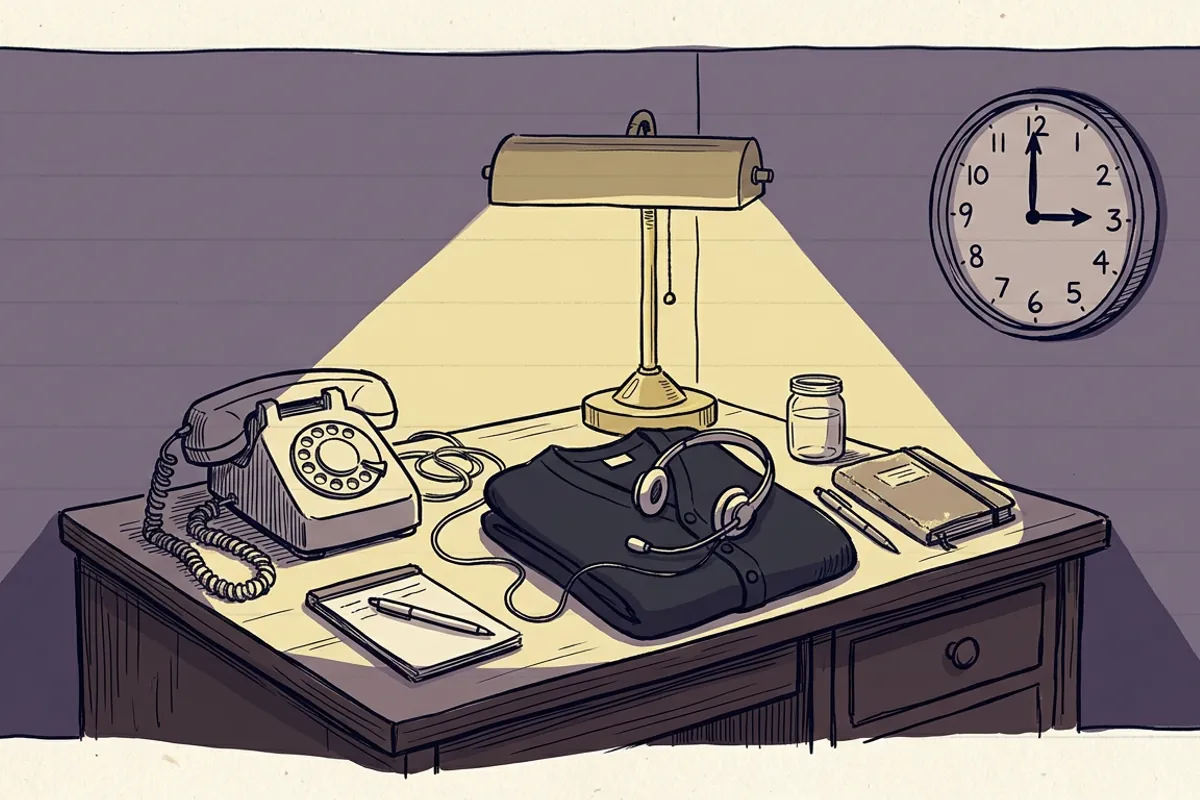
I ran my own version of that study at the hospital switchboard. We got a twenty minute break around 3 a.m., and I would put my head down on the desk in the back room. One night nobody came to get me for close to forty minutes. When I sat back down I routed a call meant for a ward to the kitchen. I was awake and talking in full sentences. By any test you could have given me, I was not really there. Forty minutes, at 3 a.m., at the end of a short week. All three at once.
Waking at the end of a cycle, and how far to trust it
This is where the pillow math started. If waking from deep sleep is worst, and sleep runs in cycles, an alarm that lands at the end of a cycle should help. So I counted backwards from the alarm. First about 15 minutes to fall asleep, meaning how long it takes you to drift off once the light is off. That is a rule of thumb too. Then cycles of about 90 minutes.
With a 6:30 a.m. alarm, five cycles plus the 15 minutes put my bedtime at 10:45 p.m. Four cycles put it at 12:15 a.m. The sleep calculator does this for any wake time and hands you four bedtimes. I used to do it on the back of a receipt at midnight.
Now the honest part, because this idea gets sold harder than the evidence supports.
- Cycles are not all the same length, even within one night for one person, so the math can be off by 20 minutes or more.
- Most deep sleep happens in the first half of the night. By a normal morning alarm you are more likely to be in light sleep or REM anyway, so cycle timing matters more for naps and very short nights.
- I could not find a trial showing that timing bedtime to cycles, on its own, makes mornings less groggy. The reasoning holds together, but nobody has tested it directly.
Here is what it did for me. Counting backwards made me go to bed at a real time. Five cycles is seven and a half hours, and once that number was on the fridge I stopped drifting to 1 a.m. My mornings got better. I think the extra sleep did most of that work, more than the precise landing. I kept the habit because it is free and gives the night a shape. The longer walk through the bedtime arithmetic is in what time should I go to bed.
Naps are where cycle timing matters most
Morning fog is annoying. Nap fog is the kind that surprises people. A nap that runs past about 30 minutes has a fair chance of reaching deep sleep, and waking out of that can leave you worse than before you lay down. That was my switchboard night exactly.
The usual rule of thumb is 10 to 20 minutes, which tends to stay in light sleep, or a full cycle of around 90 minutes if you have the time. The groggy zone is the stretch in between. The nap calculator tells you when to set the alarm so you wake before that stretch or after it.
What helps once the alarm has gone off
You cannot skip sleep inertia. You can shorten it, or at least stop making it worse.
- Give it time before anything that matters. The worst of it sits in the first minutes. I do not read work messages, drive, or decide anything about money until I have been up a while. It is the cheapest fix there is.
- Caffeine helps, with a delay. In a lab study where people slept in short blocks, Van Dongen and colleagues (Sleep, 2001) found that caffeine removed the slump in reaction time that followed waking. Coffee takes a while to act, so the first sip will not rescue the first ten minutes.
- Light and standing up. Opening the curtains and getting upright feel like they help, and I do both. The research on light as a fix for sleep inertia is thin. Hilditch, Dorrian and Banks reviewed the quick fixes in Industrial Health in 2016 and found no convincing evidence for any of them, with light showing some promise for feeling more alert. I do it because it costs nothing and gets me away from the pillow.
- Snoozing turned out not to be the villain I assumed. Sundelin and colleagues studied habitual snoozers in the Journal of Sleep Research in 2023. Half an hour of snoozing did not make people foggier, and they did slightly better on some tests right after getting up. It was a small study. Snoozing can still cost you sleep you needed, and hitting the button in your sleep is its own problem, which I wrote about in how to stop snoozing.
One more thing about alarms that make you solve a sum. The online alarm clock has that option, and it does get you sitting up. Just remember you are doing that sum at your worst minute of the day, so getting it wrong says nothing about how awake you will be in twenty minutes.
When the fog is not about the alarm
If you are groggy every morning no matter where the alarm lands, look at your sleep across the whole week rather than last night alone. Short nights stack. The National Sleep Foundation panel (Hirshkowitz et al., Sleep Health, 2015) recommends 7 to 9 hours for adults, and plenty of us run an hour or two under that for weeks. I went through what that did to my own mornings in can't wake up in the morning.
A wandering schedule does the same damage from another side. If you wake at 6 a.m. on weekdays and 10 a.m. on weekends, Monday's alarm goes off during what your body has just learned to call night. That is a mild version of the Scheer finding. Keeping my wake time within about an hour across the week did more for my mornings than any alarm trick.
If the fog lasts for hours most mornings even after full nights, talk to a doctor, because that is beyond what a spreadsheet can see, and my about page says plainly what I am and am not.
What to try tonight
Take the time you actually have to be up tomorrow and put it into the sleep calculator. Pick the earliest bedtime you will really hit, not the one that sounds virtuous. Set the alarm. Then choose one thing you will not do in the first ten minutes after it rings, whether that is email, messages or a decision. Tomorrow, notice roughly how long the fog lasts and write the number down. My spreadsheet started the same way, with one column and a guess.